
Global Disaster Awareness

Stay aware. When it matters most.

Hazora helps you understand disasters happening around the world, stay informed about threats near you, and keep an eye on the people who matter.
5 Core Hazard Types
Zero GPS Battery Drain
Standardized Severity
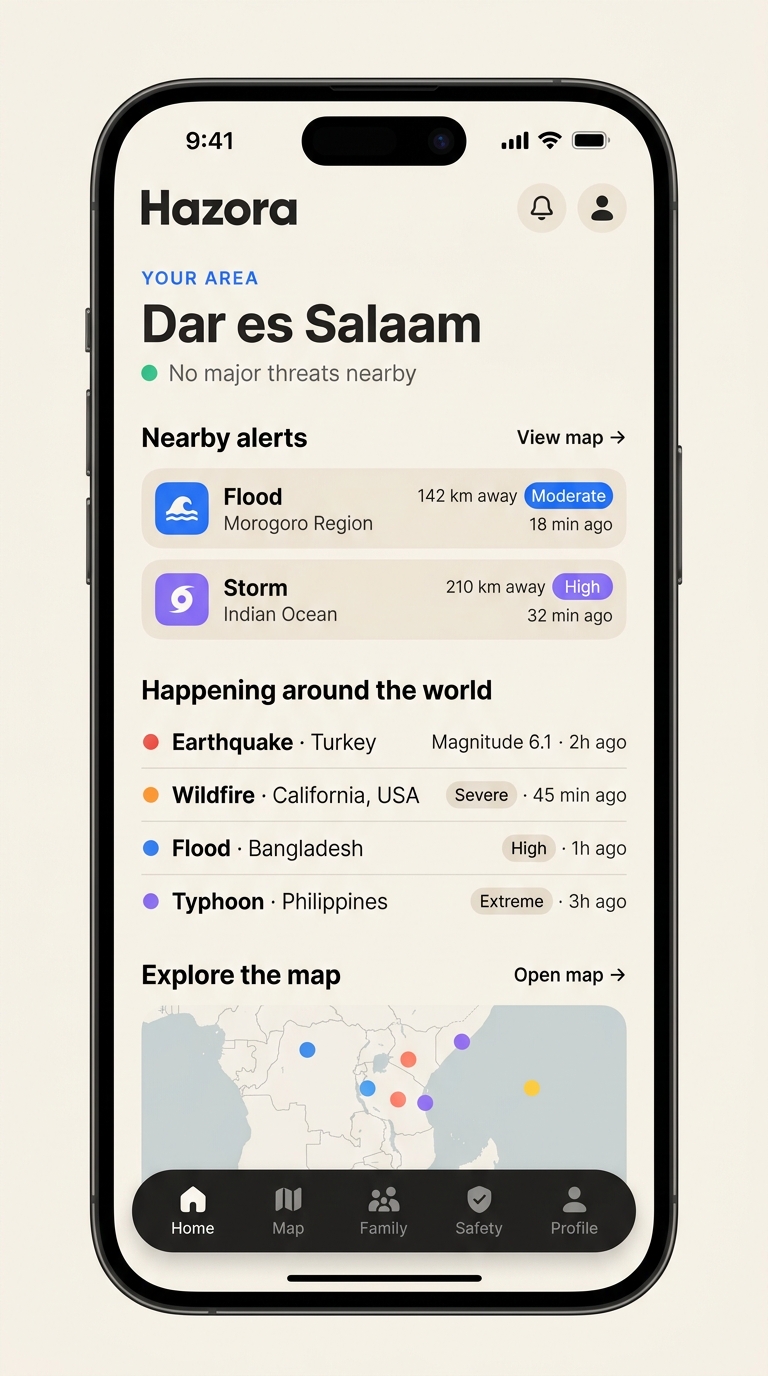
Hazora home screen showing localized alerts and recent global hazard activity
Live Disaster Alerts
Supported Disasters

One place for the events that matter.

Hazora V1 is engineered around five critical natural hazard categories, standardizing raw scientific feeds into intuitive, timely awareness.

Earthquake

Ground motion events, epicenters, focal depths, and magnitude readings tracked across seismological networks.

Flood

Rising water levels, river crest warnings, flash floods, and coastal inundation events across affected basins.

Storm

Severe weather systems, tropical cyclones, high wind speeds, and concentrated precipitation events.

Tornado

Violently rotating columns of air and severe convective supercells tracked as localized conditions develop.

Tsunami

Displacement waves triggered by sub-sea seismic tremors, requiring immediate high-ground evacuation.

How Hazora Works

Hazora brings global disaster awareness into one simple, accessible experience.

STEP 01

Global Monitoring

Hazora continuously monitors natural hazard activity across the globe, keeping watch so you don't have to search through fragmented outlets.

STEP 02

Clear Information

Complex, confusing disaster reports are translated into plain, intuitive summaries that anyone can understand in seconds.

STEP 03

Relevant to You

Hazora highlights threats near your area and the places where your family lives, filtering out distant noise.

STEP 04

Timely Awareness

Receive alerts when it matters and open a clean interactive map anytime to understand what is happening and stay prepared.

Interactive Global Map

See disasters as they unfold.

Explore active hazards worldwide through a clean, map-based interface. Tap any incident marker to review magnitude, estimated radius, and reporting sources.
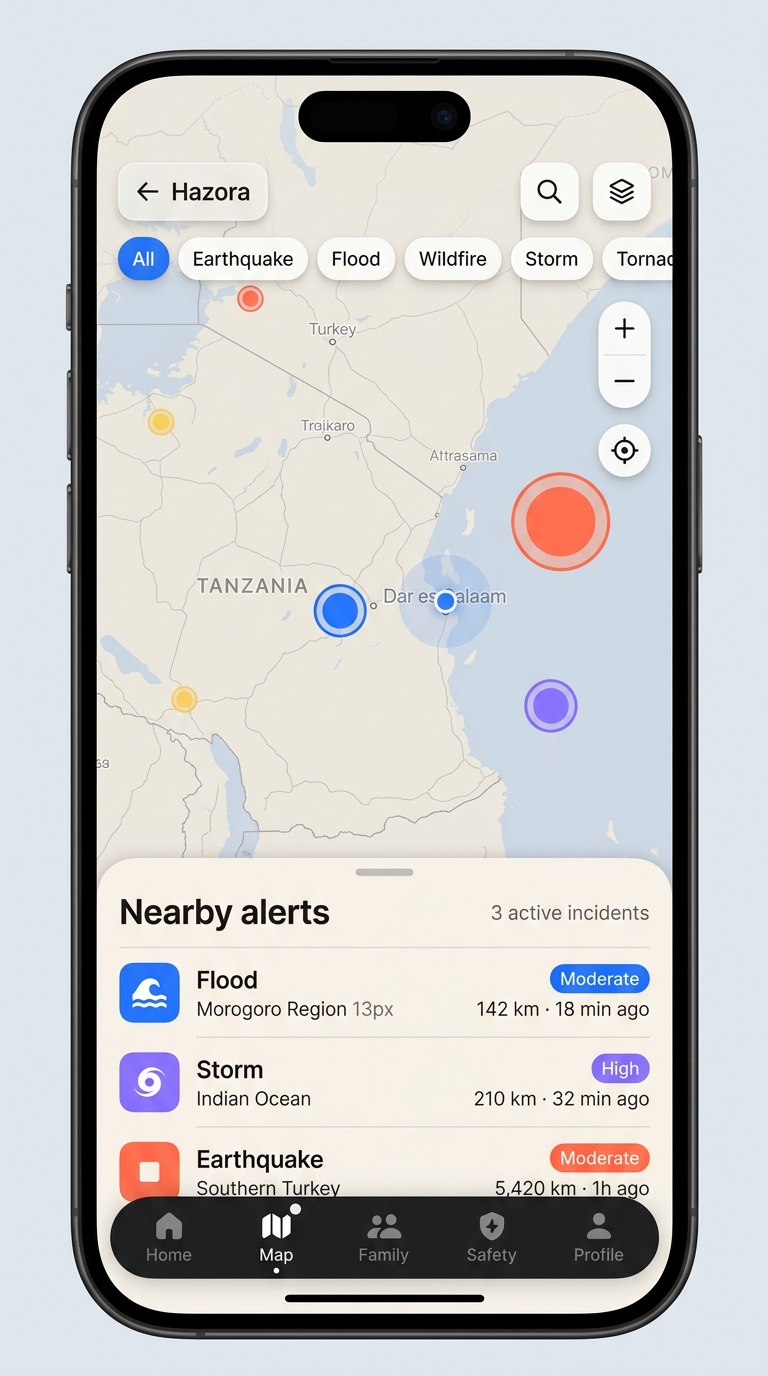
Clear incident pins color-coded by hazard type and severity
Filter by disaster category or focus on incidents near you
Fast vector map rendering designed for low-bandwidth situations
Hazora interactive map screen displaying active hazard markers
Calm Notifications

Alerts when seconds count.

Hazora notifies you when significant events occur near your chosen location. We emphasize clarity over alarmism, giving you the facts you need to make sound decisions.

Configurable notification radius (from 50 km to 500 km)
Direct link from push notifications to full incident telemetry
Best-effort push delivery engineered with minimal overhead
Hazora alerts feed showing normalized incident cards
Family Safety Circle

Keep an eye on the areas where the people you care about live.

Disasters don't just happen where you are. Hazora lets you save designated locations for family members so you can immediately see when an earthquake, flood, storm, tornado, or tsunami affects their area.

Built for Privacy — Zero GPS Battery Drain

Hazora Family does not perform continuous live GPS tracking, background location logging, or invasive check-ins. You simply save the cities or neighborhoods where your family lives.

* Status indicators reflect incident proximity to saved locations, not a person's individual physical condition.

Saved Family Locations Hazora Family
JD
John Doe
Brother · Dodoma, Tanzania
No nearby threats
AM
Amina
Sister · Dar es Salaam, Tanzania
Flood alert nearby
MA
Mother
Mwanza, Tanzania
No nearby threats
Practical Preparedness

Be prepared, not overwhelmed.

When a disaster occurs, knowing the verified response protocol saves vital seconds. Review practical Before, During, and After steps for each hazard.

Earthquake Safety Protocol

Protect your head, neck, and vital organs from falling debris.

BEFORE

Preparation

1Secure heavy furniture, water heaters, and appliances to wall studs.
2Create a family communication plan and designate an emergency outdoor meeting point.
3Store emergency water and non-perishable food supplies for at least 72 hours.
DURING

Immediate Action

1DROP to your hands and knees to prevent being knocked off balance.
2COVER your head and neck beneath a sturdy table or desk.
3HOLD ON to your shelter until shaking completely stops.
4If outdoors, move to an open area away from buildings, streetlights, and utility wires.
AFTER

Inspection & Recovery

1Expect aftershocks. Be prepared to Drop, Cover, and Hold On again immediately.
2Check yourself and those around you for injuries before moving.
3Check for gas leaks and electrical hazards; shut off main valves if damaged.

Flood Safety Protocol

Move immediately to higher ground and avoid all moving water.

BEFORE

Preparation

1Identify the nearest high ground and learn multiple evacuation routes.
2Move valuable personal items and essential documents to upper floors.
3Install backwater valves in plumbing to prevent sewer backup.
DURING

Immediate Action

1Evacuate immediately when advised by emergency managers.
2Never walk, swim, or drive through flood waters (Turn Around, Don't Drown).
3Stay off bridges spanning fast-moving waterways.
4Disconnect electrical appliances if you can do so safely on dry footing.
AFTER

Inspection & Recovery

1Return home only when local authorities declare the area safe.
2Avoid contact with floodwater, which may be contaminated with chemicals or sewage.
3Document structural and property damage thoroughly with photos before cleaning.

Severe Storm Protocol

Stay sheltered indoors away from windows, glass, and exterior walls.

BEFORE

Preparation

1Trim damaged tree limbs that could collapse onto your residence.
2Secure outdoor furniture, trash bins, and loose objects.
3Fully charge power banks, phones, and emergency radio devices.
DURING

Immediate Action

1Remain inside a sturdy building away from windows and skylights.
2Avoid wired electrical appliances and plumbing fixtures during lightning storms.
3Monitor local weather radio broadcasts and official emergency channels.
AFTER

Inspection & Recovery

1Stay vigilant for downed power lines and report them to utilities immediately.
2Inspect roofing, gutters, and siding for damage when winds subside.
3Check in on neighbors who may require special mobility assistance.

Tornado Safety Protocol

Seek lowest-floor interior shelter immediately when a warning is issued.

BEFORE

Preparation

1Identify your shelter zone: basement, storm cellar, or interior room without windows.
2Keep sturdy shoes, helmets, and a flashlight in your designated shelter area.
3Conduct seasonal tornado drills so all household members know where to go.
DURING

Immediate Action

1Go to your safe room or basement immediately upon warning notification.
2If no basement, take shelter in a hallway, closet, or bathroom on the lowest floor.
3Protect head and neck using a thick blanket, pillows, mattress, or helmet.
4Never attempt to outrun a tornado in a vehicle or remain inside a mobile home.
AFTER

Inspection & Recovery

1Exit damaged structures cautiously, watching for broken glass and exposed nails.
2Steer clear of damaged electrical lines and ruptured gas connections.
3Use text messages rather than phone calls to keep cellular lines open for 911.

Tsunami Safety Protocol

Move inland and to designated high ground immediately on foot.

BEFORE

Preparation

1Learn your local coastal tsunami evacuation zones and pedestrian routes.
2Recognize natural warning signs: strong tremors or sudden water retreat from shore.
3Keep a portable emergency go-kit readily accessible near your exit.
DURING

Immediate Action

1If you feel severe shaking near the coast, immediately head inland and uphill on foot.
2Aim for an elevation of at least 30 meters (100 feet) or 3 km inland from shore.
3Never go to the beach or harbor to watch a tsunami approach.
4Remain in your safe zone until authorities issue an official all-clear broadcast.
AFTER

Inspection & Recovery

1Stay clear of flooded coastal zones; dangerous wave surges can continue for hours.
2Remember that the first tsunami wave is rarely the largest or most destructive.
3Listen to battery-operated radio reports for verified recovery announcements.

Official Guidance Notice: Hazora is an informational tool. During any emergency, always follow mandatory directives, evacuation orders, and sirens issued by your local civil defense and emergency management authorities.

Product Philosophy

Information should be easier to understand.

We built Hazora with a simple conviction: situational awareness shouldn't require deciphering dense scientific bulletins or navigating alarmist headlines.

Calm, Dignified Utility

Emergency situations demand focus. We avoid sensationalist animations, clickbait alerts, and artificial panic. We deliver the facts as they are known.

Respect for Privacy

Safety should not come at the cost of personal surveillance. Hazora does not track your movements, log your continuous location, or sell your personal data.

Global Awareness, Local Care

Natural disasters cross borders without notice. Hazora standardizes global scientific data so you can understand what's happening wherever your family lives.

Stay aware. When it matters most.

Hazora brings global disaster awareness into one clean, reliable mobile experience. Get ready for what lies ahead.